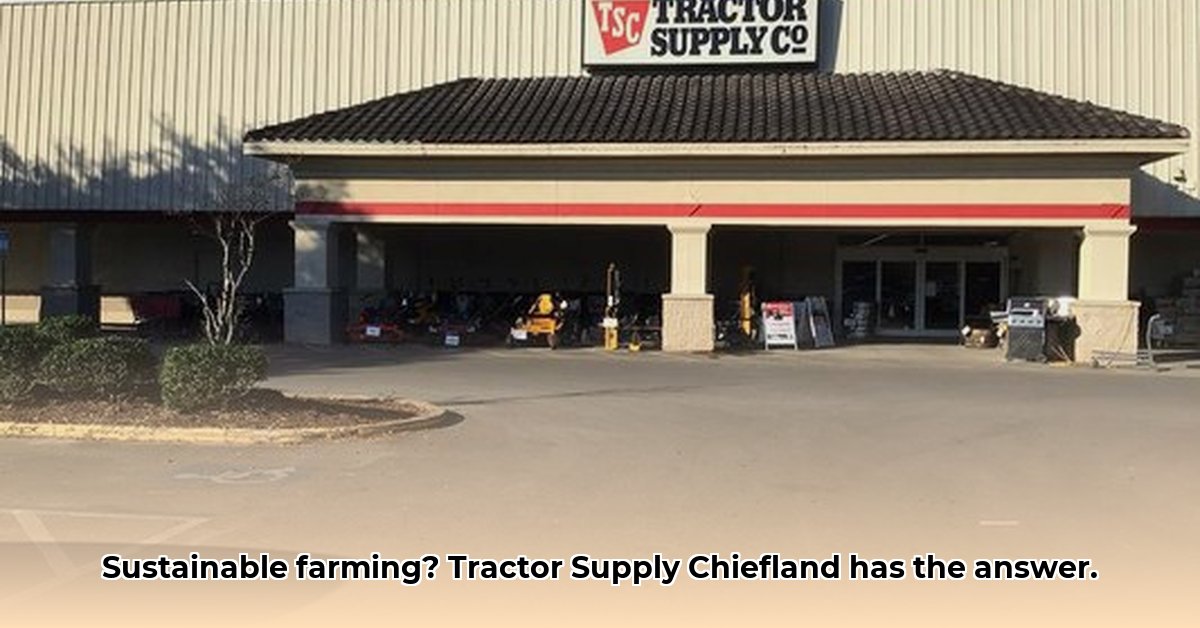
Tractor Supply (TSC) plays a significant role in the Chiefland, Florida agricultural community. But to what extent does its considerable market presence contribute to sustainable farming practices? This article examines TSC Chiefland's offerings, analyzes its impact, and offers recommendations for enhancing sustainable agriculture in the region. For more information on calf starter feed, check out this helpful resource: Calf Starter Feed.
TSC's Offerings in Chiefland: A Closer Look
The Chiefland TSC provides a wide range of products commonly used in agriculture, including animal feed, fencing materials, chicken coops, and an assortment of gardening supplies (seeds, tools, fertilizers). While these items are essential for many small-scale farmers and hobbyists, a crucial question remains: how many of these products directly support sustainable farming practices? Currently, a key gap is the lack of readily apparent information on the availability of organic seeds, eco-friendly pesticides, and resource-efficient irrigation systems. This lack of transparency hinders an accurate assessment of TSC's commitment to sustainability. This limits TSC's potential impact on larger farms requiring specialized equipment and sustainably sourced products.
Case Study Analysis: Assessing the Current Landscape
Our analysis reveals both positive and negative aspects of TSC Chiefland's current impact. The readily available essential tools and supplies serve as a valuable resource for many small-scale farmers. However, the absence of publicly accessible sales data regarding specific sustainable products prevents a precise quantification of their impact on sustainable farming practices. Furthermore, the origins and environmental impact of the store's supply chain remain unclear. Are the fertilizers offered primarily chemical-based, or are organic alternatives prominently featured? This lack of information limits a comprehensive evaluation of TSC's contribution to sustainable agriculture. The store's current inventory seems better suited to smaller operations and hobbyists, potentially overlooking the needs of larger farms seeking specialized sustainable equipment.
Stakeholder Perspectives: A Multifaceted Approach
Sustainable agriculture in Chiefland is a collective undertaking, involving several key stakeholders. Each has unique short-term and long-term needs:
| Stakeholder | Short-Term Needs (0-1 Year) | Long-Term Needs (3-5 Years) |
|---|---|---|
| Small-Scale Farmers | Access to organic fertilizers and seeds; improved training on sustainable farming methods. | Continued educational resources and workshops; access to efficient and sustainable farming techniques. |
| Tractor Supply Chiefland | Customer surveys to gauge sustainable product demand; staff training on sustainable agriculture. | Investment in an inventory management system prioritizing sustainable products; stronger relationships with ethical suppliers. |
| Local Community | Increased awareness of sustainable options and locally sourced food; community support for local farmers. | Community events showcasing sustainable practices; increased access to programs promoting sustainable initiatives. |
| TSC Corporate | Publicly available sustainability reports; investment in sustainable product research and development. | Significant investment in R&D to expand sustainable product lines; expanded outreach to larger farms. |
Challenges and Opportunities: Navigating the Future
TSC Chiefland faces significant challenges in scaling its impact. Expanding its product line to include a wider array of sustainable farming tools and supplies is critical. Improving supply chain transparency, openly communicating the sourcing of products, is equally important. However, significant opportunities for growth and improvement exist. Partnering with local agricultural extension offices could expand educational opportunities. Sponsoring local events could help engage the community. Moreover, connecting with larger sustainable farms implementing more advanced technologies would significantly broaden TSC's reach and impact within the agricultural community. How can TSC better serve larger, technology-focused, sustainable operations? This question is vital to their long-term sustainability strategy.
Recommendations and Conclusion: A Call to Action
To significantly improve its contribution to sustainable agriculture, TSC Chiefland should prioritize the following actions:
- Conduct regular customer surveys: Thoroughly understand consumer demand for sustainable products.
- Collaborate with local agricultural organizations: Leverage expertise and resources for effective educational programs.
- Invest in comprehensive staff training: Equip employees with the knowledge to advise customers effectively on sustainability.
- Expand the range of sustainable product offerings: Stock a wider variety of organic seeds, fertilizers, and tools to meet growing demand.
- Enhance supply chain transparency: Publicly report sourcing practices to build greater trust and accountability.
The path to a sustainable agricultural future in Chiefland requires collective effort. Ongoing research is crucial to fully understand TSC's role and identify areas for continuous improvement. The journey towards truly sustainable agriculture necessitates continuous learning and adaptation. Supporting local farmers markets, providing feedback to TSC, and researching sustainable practices are all valuable ways for individuals to get involved.